Saturday, June 26, 2010

THE GREAT TRAIN ROBBERY - MY TAKE

Just finished reading another of the great works of Late Michael Crichton, The Great Train Robbery. A gripping, amusing, enchanting and an unput down able book.

Very much known for his science-fiction writings, Mr. Crichton displays a completely different side of his right side of the brain. He is as successful in exploiting each of his characters as he is the the culture and traditions of the nineteenth century. He can literally make you smile and admire the craft of Edward Pierce, the central character, in planning, handling all the difficulties and hurdles that arise even minutes before the start of the execution of the plan and finally executing it so well that he, two of his acquaintances and the money acquired from the robbery couldn't be found till the end of the book. A serious plot which could have become quite morbid is put down in a light-hearted manner but not losing its lustre of nail-biting moments providing a gush of adrenaline rush.

Here is the summary of the novel taken from wikipedia.

Plot:
In 1854, Edward Pierce, a charismatic and affluent "cracksman" or master thief, makes plans to steal a shipment of gold worth more than twelve thousand pounds being transported monthly from London to the Crimean War front. Unfortunately, he faces enormous obstacles as the bank has taken strict precautions, including locking the gold in two heavy safes, each of which has two locks and thus requiring a total of four keys to open. He then recruits Robert Agar, a "screwsman" or specialist in copying keys, as an accomplice.

To ensure the success of his bold plan, Pierce spends more than a year in preparation as well as dealing with various unexpected developments; his first steps are fairly easy as he uses his wealth and social contacts to procure information on the security measures and locations of the keys: the bank's executives Mr. Henry Fowler and Mr. Edgar Trent each have a key in their possession while the other two are locked in a cabinet at the offices of the South Eastern Railway at the London Bridge train station. Much of the action during the story develops simultaneously although told in different order.

Pierce's first target is the key held by Edgar Trent. The attempt to take Mr. Trent's key is difficult as the man is a total stranger and Pierce has no clues or prior information on his habits. Through painstaking surveillance, conversations with bank employees and a deliberately bungled pickpocketing attempt, Pierce deduces that Mr. Trent's key is kept at his mansion but is still unable to learn the exact location. Finally, after learning that Trent is keen on ratting (a blood sport involving the betting on dogs killing rats), Pierce succeeds in becoming acquainted with the man and visiting the Trent mansion feigns romantic interest in Elizabeth Trent, Mr. Trent's twenty-nine year old daughter who has had few suitors. Edward then begins to court Elizabeth and manages to learn that the key is most likely located in the house's basement wine cellar. With the assistance of his mistress Miriam and cab driver Barlow, Pierce and Agar successfully break into Mr. Trent's home at night and make a wax copy of the key after much painstaking searching.

Henry Fowler develops syphilis and, being unwilling to seek medical attention out of embarrassment, decides to seek a remedy through sleeping with a virgin (similar to superstitions about HIV) and asks Pierce for assistance. After charging Fowler an exorbitant price of one hundred guineas for a night of pleasure with a twelve year old (twelve being the legal age of consent), Pierce and Agar take advantage of the opportunity to make a copy of Fowler's key (which he always carried with him around his neck but took off left on the bedside table during the assignation).

The most difficult keys to copy are the two keys at the train station which Pierce plans to procure and copy by night; the presence of "crushers" (policeman) forces him to recruit a "snakesman" (burglar able to slip inside buildings through small and cramped spaces) nicknamed Clean Willy who is currently incarcerated in the high security Newgate Prison. He sends a message through Willy's former mistress and assists him in escaping from Newgate while the public is distracted by an execution. After nursing Willy back to health from injuries received during the escape, the criminals succeed in making wax copies of the two keys at the railway station, completing the task with only seconds to spare before detection.

Now possessing all four copies of the necessary keys, Pierce loses no time in bribing Burgess, the poorly paid guard on the train who rides in the baggage van containing the safes. Agar is then able to perform a dry run of the theft on February 17, 1855, making sure that the copied keys work perfectly.

Everything appears to be moving along smoothly (despite some minor setbacks that cause delays) and the actual theft is planned for May 22nd when the would-be thieves find themselves seriously compromised: Clean Willy turns informant to the police (presumably, although the book does not specify the reason, as a result of being picked up for an unknown crime). Luckily Pierce manages to have Willy murdered before he could reveal the most crucial information, although their plans are now greatly compromised by law enforcement agents who correctly fear that a major robbery is at hand. Through careful manipulation of a "nose" (informant), the criminals manage to divert the police's attention to an alleged robbery in Greenwich, leaving them free and clear to finally strike.

On the eve of the Great Train Robbery, another unexpected development occurs as a new railway policy requires the train doors to be locked from the outside. Unwilling to further delay their plans, Pierce manages to smuggle Agar into the baggage van (in spite of new security precautions) inside a coffin and then risks his life by climbing across the roof of the train during their journey and unlocking the door from the outside, thus allowing them to drop off the gold at a pre-arranged point. By the next day, much of England is in an uproar upon the discovery of the robbery with every organization involved in the gold shipment blaming each other, and there are few leads towards the true culprits who have largely vanished from the public eye.
Although their daring exploits appear to have succeeded, Pierce, Agar and Burgess are ultimately apprehended after Agar's mistress, who has been arrested for robbing a drunk, becomes a police informant to escape imprisonment and Agar confesses after being threatened with transportation to Australia by Scotland Yard official Edward Harranby. Pierce and Burgess are arrested at a prize-fighting event in Manchester, and at the conclusion of the book all three are convicted. Pierce is sentenced to a long prison term but successfully manages to escape while being transported from the court and disappears, though reports indicate he, Miriam and Barlow spend much of the rest of their lives living in luxury at various foreign cities such as New York and Paris. The train guard Burgess dies of cholera during his short prison term while Agar is indeed transported to Australia but actually manages to prosper and pass away a wealthy man. Edgar Trent dies from a chest ailment in 1857, while Henry Fowler dies from "unknown causes" (presumably from the syphilis he had contracted) in 1858. The gold from the Great Train Robbery is never recovered.


Characters:
Edward Pierce: A professional burglar who poses as a gentleman amongst his upper class acquaintances in Victorian England. Pierce is arguably one of the most mysterious characters found in Crichton's works as almost nothing is known about his background; indeed even his name is likely false as others also refer to him as "John Simms" along with other titles. Nonetheless, his actions and thoughts in the book consistently demonstrate a sharp intelligence and broad knowledge which far outstrips that of his fellow criminals; perhaps his greatest asset is an ability to easily navigate through both the British underworld and the aristocracy. Throughout the planning and the execution of the Great Train Robbery, Pierce is always cautious, never truly trusting anyone--this caution is eventually justified as it is Agar, his closest accomplice who finally sells him out.
Robert Agar: A twenty six year old screwsman (criminal who is skilled with copying keys and picking locks) at the beginning of the novel, Agar is pivotal to the eventual success of the Great Train Robbery, though he is also largely responsible for the culprits' eventual capture. He is apparently very well acquainted with many criminals and helped Pierce identify many persons of interest including the informant Chokee Bill as well as the snakesman Clean Willy. Though he became a police informant at the end of the book in hopes of avoiding transportation to Australia, the judge sends him there anyway and he dies a wealthy man. Ironically, Michael Crichton depicts Robert Agar as Pierce's lackey with limited intelligence though his real life counterpart actually masterminded much of the robbery and got away with minor punishments.
Clean Willy: Generally acknowledged to be the best snakesman available in London although his skills were apparently inadequate to prevent arrest and incarceration (which occurred at least twice before and during the story). Edward Pierce went to great expense to help Willy escape imprisonment at a high security prison for the sole purpose of enlisting the snakesman's aid in the train robbery. After successfully completing his tasks, Willy is paid off by Pierce and disappears for some time from the narrative before resurfacing as a police informant, almost jeopardizing the entire scheme. Ultimately he is garroted by Barlow in a boardinghouse.
Barlow: A violent thug and murderer who served Edward Pierce loyally as a cabby although his services were also employed for other purposes such as the death of Clean Willy. He and Ms. Miriam managed to elude capture by the authorities, eventually rescuing him from the authorities before the trio completely disappeared.
Ms. Miriam: Edward Pierce's mistress who is generally regarded as highly attractive by other characters in the book. She is also a talented actress and plays rather brief though important roles in the execution of the train robbery such as pretending Agar was her dead brother and distracting Mr. Fowler while Pierce unlocked the cargo train. In many ways, she and Pierce are very similar and well suited for each other: both are resourceful and possess the ability to mix with men and women of all classes.


Historical Deviations:
The story is a fictionalized representation of the historical events that happened, although the setting can be considered quite accurate. The character names are mixed up in the novel, for example, the main protagonist William Pierce is changed to Edward Pierce, and Edward Agar to Robert Agar.


Make sure you read the book on a Friday or Saturday night, you don't want to be sleeping at work the next day, do you?!!

Friday, June 25, 2010

India vs Education

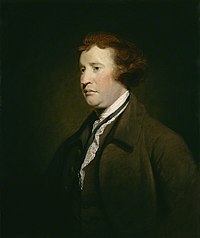
"Education is the sole defence of a nation", said Burke, an Anglo-Irish statesman, author, orator, political theorist, and philosopher.
And how true do we find it today. But sadly, we Indians have a habit of creating great theories and philosophies, attending religious and spiritual discourses, reading and agreeing with almost all the scriptures in the holy books but we never, never do we act on them. First of all, what are the discourses, philosophies and holy books telling us? They all sure do differ in content and quantity of it but if you consider the quality, they are all the same. They all want us to be wise and inculcate civilised methods of living in ourselves. So how do we gain wisdom? There's only one way in today's world, education.

A common man (and woman) would say, "the world today is extremely materialistic and as a result of that the education dispersed in various institutions has become corrupt towards wisdom. We cannot enhance our wisdom through what is taught in schools and universities. The meaning of real education does not exist anymore in this age." Yes it's true, but the essence of education is still not lost. Even today an educated mind is more open to changes and able to adapt to given situations more easily. Educated men and women can handle problems in a more rational way than uneducated ones. Education continues to inculcate the habit of reasoning which is completely absent in the uneducated class. It comes as no surprise that the uneducated are burdened with grief and sorrow most of the time as compared to their counterparts and one of the most significant reasons of this is a strong belief in superstitions. I would like to narrate a story here regarding this point:
There was a temple in a rural part of India. The priest used to conduct daily morning and evening prayers without fail. However, he faced one nagging problem. There was a cat which would give the priest and his disciples a hard time while conducting the prayers daily as the cat would move around the temple disturbing the setting of the rituals involved during the prayers. It would spill the oil from the lamps, lick the holy sculpture of the Lord and so on. This made the priest order his disciples to catch the cat and put it in a cage during the prayers. The disciples followed his orders and the prayers were now conducted very smoothly with no problems at all. This continued for several years.
Unfortunately, one day, the priest took ill and died of the sickness. So one of the disciples of the priest was made the head priest now and it was his duty to take care of the prayers which were taking place since several years. The priest carried out his duties pretty well and pleased everyone. A few days later the menace in the face of the cat died too. There was no need of a cage now but the priest and his disciples had something else in their minds. The head priest said, "Our teacher had a holy habit of caging a cat while conducting the prayers and that cat has unfortunately died. However, his ritual shall be carried out with all honor and sincerity. Let's find another cat and cage it during the prayers and honor our great teacher." And this is exactly what they did.
I do not need to mention that these priests were uneducated and pathetically superstitious.
But it is not just superstition that acts as a parasite on the uneducated class of society, it's the unwillingness of many people across the uneducated world to avoid educating themselves and their relatives. It's pretty common in India to hear from a successful business man saying to his son, " पढ़ लिख के क्या कर लोगे? जो धंदा मैं कर रहा हूँ उसी पे लग जाओ, करोड़ों में खेलोगे और अगर पढाई करोगे तो अपने (कोई सम्बन्धी) की तरह हज़ार रुपये की तनख्वा में रह जाओगे." (what will you achieve through education? Take over my business and you'll earn in millions and billions and if you go for studies you'll end up like your (relative) earning a thousand bucks only). The father here doesn't realise that he had to pass through a lot of dark and difficult times to establish such a great business. The son would take over the great empire as it is but will never be able to expand it and there are high chances that he'll lose everything his father leaves behind for him as he wouldn't be having the required open mind ready to grasp the knowledge of the changing business world and adapt to the changes. While attending business meetings and conferences he wouldn't be able to stand up and speak in front of so many people most of whom are likely to be educated. If attending an international business meetings or conferences, it gets worse. He is likely to treat his children the same way he was treated by his father and we all know, to survive today's competitive world education is the primary requirement. In the end he is most likely to blame his father for not educating him and making him an able gentleman and that's where the family problems start.
Lack of education also prevents people from advancing towards social benefits and makes them unaware of the changes taking place around them. For example, a few days back I used the web cam while talking to someone using Skype and I got a really unexpected reaction from my relatives. It was a kind of technological magic for them. Though web cams have been around since many years and it's become a child's play to use them, my usage of this facility made my relatives give credit to my computer engineering skills (now why the heck should I not accept compliments!!).
These are just a few among many instances of what lack of education does to us. The rising population, poverty, unemployment, corruption, are all due to absence of education in the Indian society. Here is a link to the list of countries by literacy rate as included in the United Nations Development Programme Report 2009. I'm honestly not surprised by India's position in the table (Note: Pakistan has been featured twice in the table, don't ask me how and why. I didn't create the table). The vast population also has to be blamed for the figures dropping but the vast population has to be blamed for the lack of quality education among the people. Even if it is present, it's not utilised because we are Indians. We do not believe in bringing changes ourselves, we expect a foreign party to do it for us. Even if an Indian takes charge of doing it himself/herself, he/she would never be allowed to do it, not by the society, not by the government and not even by his/her family, because we all lack education.
I was reading some success stories on Reader's Digest and it's sad to say that none of them were about an Indian. One thing that I noticed from those stories is that the people had become successful doing what they believed in. They did something which no Indian would do or would be allowed to do. One of them started out picking garbage from houses and now owns a recycle company profiting in millions, one of the fathers left his job and along with his family went on a trip and created a website to post details about the trip. It became so popular that this became a full time job and they are now earning in millions through the website. Their children help them too design the website with wonderful ideas. No one ridiculed their decision and let them do what they wished.
This became possible because the family was well educated and knew the basic fact about success of a business in today's world, the Internet. They were well educated about how to design a website and use it well. So, education is extremely necessary for development of any society.
I hope I was able to bring forward the importance of going to schools and having a passion for gaining knowledge through this article. This article is not to hurt anyone's sentiments but just to spread awareness. Please do not confuse education with the so called higher and richer class of the society. There are many rich people living in posh areas of India but are uneducated.

There is nothing that an uneducated person can teach an educated person and no matter under what conditions and lifestyle an educated person is today, tomorrow's always better for him/her and tomorrow's always worse for the uneducated.

Tuesday, June 22, 2010

About God

Once upon a time there lived a farmer. He worked hard all day to produce enough harvest to feed his family and make some money to go about his daily chores. He went about his routine daily with complete sincerity. He had no weekends and medical leaves as farming was his sole source of livelihood. No matter how difficult and tiresome his life was, he never complained. However, he had a habit of quoting the Lord's name just five times before going to work on the field each day. He didn't pray or remember Him throughout the day and night after that but still God had given him enough to sustain himself and his family pretty well.

This made Lord Narada restless as he was in a habit of reciting God's name all day and night but God was never as happy with him as He was with the farmer. One day, Narada went to God and asked, "Great Lord, I sing in praise of you more than I breathe but your grace is never as much as it is on that petty farmer who quotes your name only five times a day. I find this unfair on your part and wish for a satisfactory explanation."
God smiled (just like He always does in every Indian TV show, movies and books) and said, "take this lamp filled with oil up to the brim and come back to me after you have taken one full revolution around the earth. But make sure not a single drop of oil spills from this lamp." And handed Narada a lamp filled with oil up to the brim. Narada set out on his voyage happily as this was as easy a job for him as is for a child to cry out for his mother. He returned to God after completing his journey with no drop of oil spilled from the lamp and said with his head bowed, "Lord, I have completed the job you gave me but I'm still waiting for my answer."
The Lord replied, "how many times did you think about me when you were taking a round of the earth?"
"I didn't think about you anytime my Lord as the task given to me was directly by you so on doing this task I'm always connected to you."
"The task of farming given to the farmer is also given by me but still he quotes my name five times a day with complete dedication. Had he been doing it only once, I would be as much happy with him as I'm now. Now, I think, I have answered your question."
"Yes my Lord. I have received my answer and I promise that I shall remember you even while doing the work given to me by you and I will never doubt your grace over your followers."
So, if you're one of those who spend hours in the morning or/and in the evening praying to God, there's good news, it isn't that necessary.
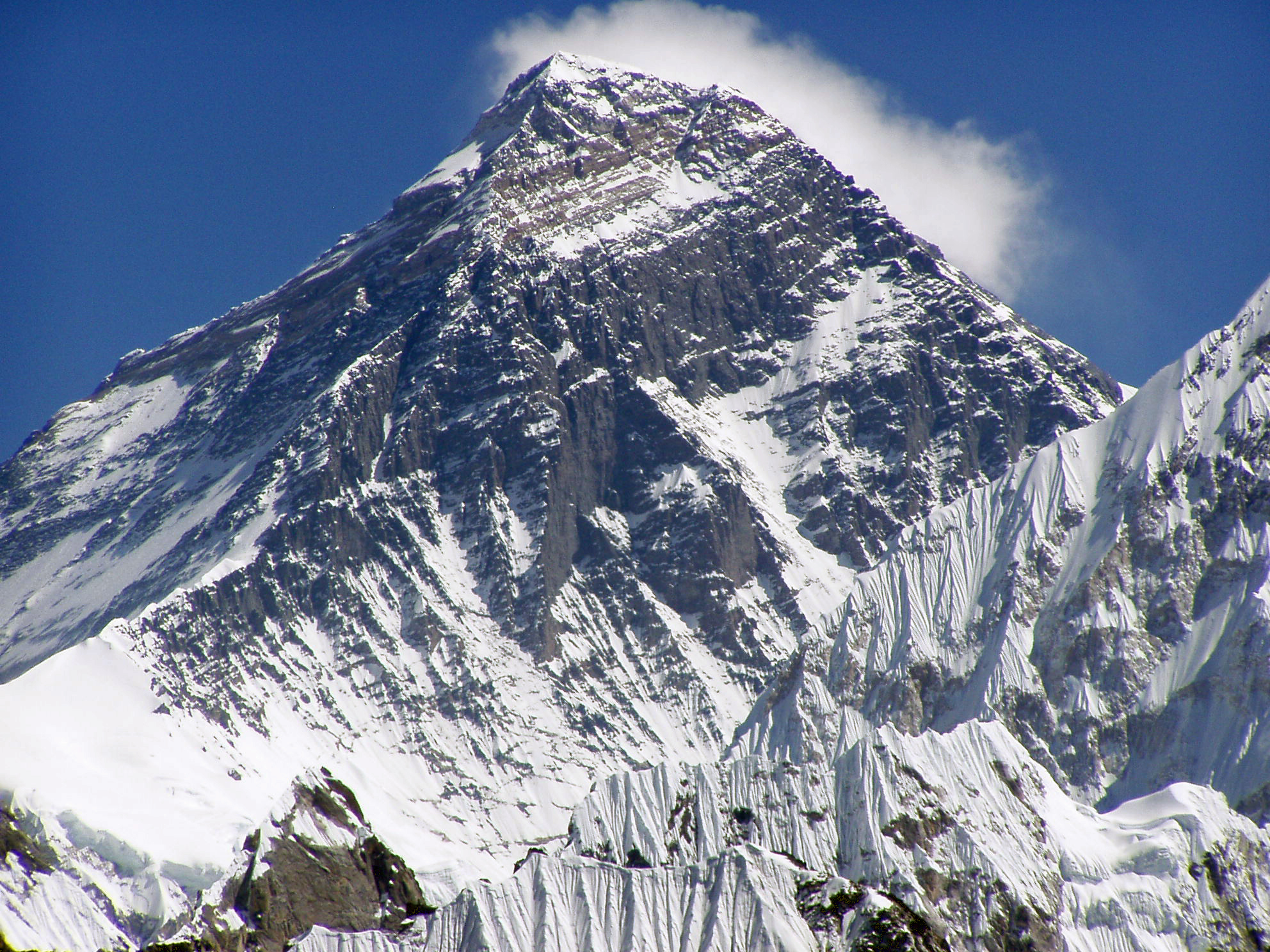
What is God? God is just a feeling like that of wind and pain. You cannot see Him but your sincerity can bring you close to Him. He's just a means of growing your strengths and damping your weaknesses so that you achieve what you strife for. The Ramayana and Mahabharata give accounts of even demons fulfilling their wishes because of their sincerity towards God. If God can help the demons then why not us. We're far better than them, aren't we? God did not fill Sir Edmund Hillary with extra physical strength and climbing skills to climb Mt.Everest but it was his own determination and probably his belief that God is with him that helped him become the first man in history to achieve such a feat. So belief in God is just a positive source for energy which helps us get what we want if we do our duties with all dedication.
Now that we know what God is, how do we reach Him? If you read the scriptures you'd notice that all we dwellers of earth have been asked for is being nice to one another. The Gita, Quran, Bible and other holy books state a path towards the supreme Lord. This path is treaded by following the basic lessons of 'Humanity' such as respecting and loving each creation of God, respecting the work assigned to us by Him and establishing faith in Him. The path is easy and simple, just love your fellow beings and you reach God. But like they say, it's never easy to be simple. There's no point in wasting time praying if you close your window on a traffic signal if a hungry child approaches your car or if you turn your head away if an elderly woman comes to you begging for food or money. The fact is, you do not have to spend a single minute praying if you're a good human because then you wouldn't have to pray for yourself, there will be others praying for you.
To quote Sir Edmund Hillary, "when I've been on slightly questionable expeditions, people have prayed for my welfare, but I certainly haven't."

WAKE UP!

We all do believe there is some super natural power controlling the whole universe. There is something undiscovered by and probably beyond the reach of science that is manipulating the universal objects.
"Space weather forecasting is still in its infancy," said director of NOAA's Space Weather Prediction Center in Colorado Mr.Thomas Bogdan (for details click here). Well, considering the vast expanse of the universe and its hidden, but open, chambers of secrets, weather forecasting will never attain puberty. I'm not trying to be a pessimist here by downgrading Mr.Bogdan, I'm just trying to make a point that some secrets, some cycles, some elements and some phenomena are beyond human capability......right now. We humans have the capability to uncover all secrets and hidden messages, but is it really us? Is it really our own intelligence that is helping us become the most powerful species ever in the history of Earth? Is there a possibility that someone is only manipulating our lives and we're nothing but mere pawns of the game he's been playing with us since our advent on this planet? Here are some facts which say we're just a bunch of over rated mammals.

  • We hardly have any idea about extra-terrestrial life.

  • There are many unsolved mysteries about our home planet itself.

  • There are loads of uncovered mysteries about the HUMAN BODY.

  • We maybe the most intelligent species on earth but there's no denying the fact that we're making rapid progress towards our own extinction.

  • We're are the only species who kill for purposes other than food and defense (can someone forward this to Osama?).
No matter how advanced we are, if the earth has to come to an end in 2012 or if the blackout in 2013 has to occur, we by no means can stop these phenomena just like the tsunami of 2004.
These facts coupled with some more like, our inability to gain knowledge of man-made or natural disasters before they occur or atleast take precautionary measures, make us just another species to rule planet earth like the rulers of the jurassic period. The only difference is that they had physical strength and we have brains. But are we really using our brains effectively?
Is it too late to shed our ego and live with nature, not as its counterpart, but as its part? It's never too late (exceptions are always there guys). It would be a bit difficult to cut down on carbon emmision, a bit tiresome to plant a tree once a month, a bit 'anti-religious' (to all so called jihadis) to not kill anyone and a bit strange to live up to the meaning of 'Humanity', the word which sounds so hypothetical today, but c'mon we all have the incredible ability to adapt to any given situation. A few weeks of following 'Humanity' will turn us human and who knows, maybe the next Satya-yuga, from the Hindu scriptures, is just round the corner. If we all adapt to the actual meaning of 'Humanity' there would be a majority of us treading the right path and the minority will we compelled to follow us. This requires initiative and in the beginning there would be some resistance but isn't a peaceful world desired by us all? To quote Gandhi, "be the change you want to see in the world."
I know what I just said is nothing new and it's something realised by all long long back, but that's exactly what I'm saying. We have only realised what we ought to do but we've not acted on it. Maybe it's high time we stop dreaming, of daisies swaying along with the wind in spring, the sun shining turning everything its light touches into gold and children playing happily in the fields like there is nothing they have to be worried about. Artists have been dreaming about a world like this since ages. They have shown us our destination and it's time to wake up and catch the first flight for such a world. The soldiers fighting in Iraq, in Afghanistan, on the Indo-Pak border and at many other parts of the world have a life too. They have a family who prays each moment for their father, husband, son, brother to come home safe, let's give them that. There are still babies taking birth with disabilities and defects in Japan, thanks to the nuke missile from US. Imagine your child or sibling without a limb, imagine him/her without an eye or imagine the worst case of a child born dead. This could all happen to anyone, we're all vulnerable.
What if we're unable to curb our activities harassing the environment? Soon there would be air for sale, 20 bucks for a little bag of Oxygen? Why not? We're selling water today and we've been selling food since ages so why not air? All this feels like a night mare, right? But we can prevent it and nobody needs to tell us how. We're the most intelligent and powerful species on earth and we know we can make the dream of an artist's world come true through a basic action to convert our dreams into reality......wake up!

Friday, June 18, 2010

TIRED OF USING TECHNOLOGY (Title adapted)

This one's not mine:

A computer was something on TV
From a science-fiction show of note
A window was something you hated to clean
And ram was the cousin of a goat

Meg was the name of my girlfriend
And gig was a job for the nights
Now they all mean different things
And that really mega bytes.

An application was for employment
A program was a TV show
A cursor used profanity
A keyboard was a piano.

Memory was something that you lost with age
A CD was a bank account
And if you had a 3 inch Floppy
You hoped nobody found out.

Compress was something you did to the garbage
Not something you did to a file
And if you unzipped anything in public
You’d be in jail for a while.

Log on was adding wood to the fire
Hard drive was a long trip on the road
A mouse pad was where a mouse lived
And a backup happened to your commode.

Cut you did with a pocket knife
Paste you did with glue
A web was a spider’s home
And a virus was the flu.

I guess I’ll stick to my pad and paper
And the memory in my head
I hear nobody’s been killed in a computer crash
But when it happens they wish they were dead.